Your pelvic floor works quietly in the background every day, supporting important parts of your body and contributing to bladder control, core stability, and sexual wellness. Yet it is one of those areas many of us do not think about until something feels different.
Pelvic floor wellness is about more than simply doing Kegel exercises. It starts with understanding these muscles, learning how to engage and relax them correctly, and recognizing that everyone's needs are different.
Whether you're completely new to pelvic floor exercises or interested in adding a Kegel training set to your wellness routine, here's what you should know about caring for this important group of muscles.
What Is Your Pelvic Floor?
The pelvic floor is a group of muscles and connective tissues located at the base of the pelvis. These muscles help support pelvic organs, including the bladder, uterus, and rectum, while also playing a role in bladder and bowel control.
Like other muscles in the body, pelvic floor muscles can be intentionally contracted and relaxed. Pelvic floor muscle exercises, commonly known as Kegels, are designed to help you become more aware of and strengthen these muscles when strengthening is appropriate for you.
Pelvic floor wellness isn't only about strength. Learning to relax the pelvic floor is important, too. If you're experiencing pelvic pain, pressure, urinary symptoms, or difficulty performing Kegel exercises comfortably, a healthcare professional or pelvic floor physical therapist can help determine what your body needs.
Quick Takeaways
- Your pelvic floor has several jobs: These muscles help support pelvic organs and contribute to bladder and bowel control.
- Kegels are pelvic floor exercises: They involve intentionally contracting and then fully relaxing the pelvic floor muscles.
- Technique matters: More contractions or more resistance are not automatically better.
- Training tools are optional: Kegel trainers can add resistance or feedback, but you can begin learning pelvic floor contractions without equipment.
- Progress gradually: If you choose a weighted training system, start at an appropriate level rather than immediately choosing the greatest resistance.
- Listen to your body: Pain and persistent discomfort are reasons to stop and seek individualized guidance.
Why Does Pelvic Floor Wellness Matter?
Pelvic floor muscles provide support for several pelvic organs and are involved in everyday functions that are easy to take for granted. Changes to these muscles can occur throughout life, and factors such as pregnancy, childbirth, surgery, aging, chronic coughing, and repeated straining may affect pelvic floor strength.
According to Mayo Clinic, pelvic floor exercises may help some people prevent or manage certain forms of urinary leakage and other pelvic floor symptoms. Mayo Clinic also emphasizes learning proper technique and recommends asking a healthcare professional whether Kegel exercises are appropriate for you.
This is an important distinction: pelvic floor wellness should not be treated as a challenge to make the muscles as strong as possible. A healthy approach involves awareness, appropriate muscle control, and the ability to both contract and relax.
How Do Kegel Exercises Work?
A Kegel is a controlled contraction of the pelvic floor muscles followed by relaxation. One of the first challenges is simply learning to identify the correct muscles without relying too heavily on your abdominal, thigh, or glute muscles.
Mayo Clinic recommends focusing on the pelvic floor while continuing to breathe normally. Although briefly stopping urine flow is sometimes described as a way to identify the correct muscles, repeatedly performing Kegels while urinating is not recommended because it can interfere with complete bladder emptying.
Once you understand the basic contraction, pelvic floor exercises can generally be practiced without any equipment at all. A trainer can then be considered as an optional tool for adding resistance or helping you become more aware of the exercise.
Building a Pelvic Floor Routine
A good pelvic floor routine should feel intentional rather than intense. If you're new to these exercises, focus first on technique and your ability to fully relax after each contraction.
A Simple Approach to Pelvic Floor Wellness
- Identify: Learn where your pelvic floor muscles are and how a contraction feels.
- Contract: Gently engage the pelvic floor without unnecessarily tightening surrounding muscles.
- Breathe: Continue breathing normally instead of holding your breath.
- Relax: Allow the muscles to fully release between contractions.
- Progress: Introduce additional resistance only when it feels appropriate.
- Pay attention: Stop if you experience pain or persistent discomfort.
If you aren't sure whether you're engaging the correct muscles, a pelvic floor physical therapist or other qualified healthcare professional can provide individualized instruction.
Adding Resistance: Kegel Training Sets
Once you're comfortable identifying and controlling your pelvic floor muscles, you may be interested in a training system that provides different levels of resistance.
Weighted pelvic floor trainers are designed to add resistance to intentional exercises. Sets with multiple weights can make it possible to progress gradually rather than beginning with a single resistance level that may not suit your experience.
Think of progression as an option rather than a race. The heaviest trainer isn't automatically the best trainer, and you do not need to advance simply because another weight is available.
Featured Pelvic Floor Training Set
Recommended Product: 3-Piece Silicone Kegel Training Set

A progressive silicone training set for exploring pelvic floor exercises at your own pace.
View Product- Three-piece system: Multiple options allow you to explore different levels of resistance.
- Silicone design: A smooth material commonly used for personal wellness products.
- Progressive approach: A training set allows you to adjust your routine rather than relying on one fixed weight.
Comfort Matters During Pelvic Floor Training
Pelvic floor training should not require you to push through pain or significant discomfort. Taking your time, following the directions supplied with your trainer, and choosing products designed specifically for their intended use can all make the experience more approachable.
For products intended for insertion, lubrication can also help reduce unwanted friction. Always check the care instructions for both your trainer and lubricant to ensure they are compatible.
Add Comfort With Water-Based Lubricant
Recommended Product: The Rabbit Company Water-Based Lube

A simple way to add glide and reduce unwanted friction during personal wellness routines.
Learn More- Added glide: Lubrication can make inserting an appropriate personal wellness product more comfortable.
- Water-based formula: A versatile option for many personal wellness routines.
- Use as needed: Comfort should always take priority over trying to use a product without sufficient lubrication.
Pelvic Floor Awareness and Sexual Wellness
The pelvic floor also has a relationship with sexual wellness. Becoming more aware of these muscles may help you better understand when you're contracting, when you're holding tension, and when you're fully relaxing.
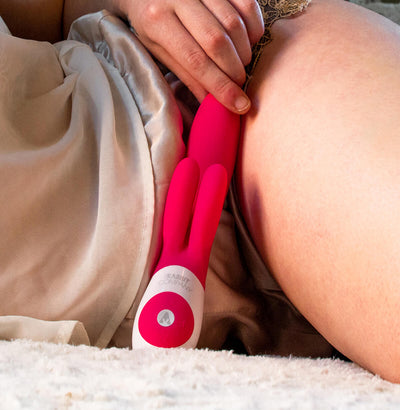
That awareness can be useful beyond a traditional Kegel routine. Some personal wellness products are designed to incorporate vibration alongside pelvic floor-focused exploration, offering a different experience from a standard weighted trainer.
These products should not be considered replacements for medical pelvic floor therapy. Instead, they can be viewed as personal wellness tools for adults who are interested in exploring their bodies and preferences.
Explore a Vibrating Training Option
Recommended Product: G-Play Vibrating Squirt Trainer

An option for adults interested in incorporating vibration into personal exploration.
View Product- Vibrating design: Offers a different experience from traditional non-vibrating pelvic floor trainers.
- Personal exploration: Designed for adults interested in becoming more familiar with their preferences.
- Wellness routine: Can be considered alongside other personal wellness products rather than as a medical treatment.
What Should You Look for in a Pelvic Floor Trainer?
| Feature | What to Consider |
|---|---|
| Material | Look for clearly identified materials and straightforward cleaning instructions. |
| Size | Check actual product dimensions rather than relying only on labels such as small or medium. |
| Weight | Choose resistance appropriate for your comfort and experience instead of automatically choosing the heaviest option. |
| Progression | A multi-piece set can provide different resistance options as your routine changes. |
| Removal | Choose products specifically designed for their intended use and follow the manufacturer's removal instructions. |
| Care | Follow product-specific cleaning, drying, and storage directions after each use. |
When Kegels May Not Be the Answer
Pelvic floor symptoms do not always mean the muscles simply need to become stronger. That's one reason it's important not to treat Kegel exercises as a universal solution.
If you're experiencing pelvic pain, persistent pressure, discomfort during intimacy, difficulty controlling or relaxing the pelvic floor muscles, or ongoing bladder or bowel symptoms, consider talking with a qualified healthcare professional or pelvic floor physical therapist before beginning a strengthening routine.
Professional guidance can help identify what your pelvic floor actually needs rather than assuming more strengthening is always the answer.
Pelvic floor wellness is about control and awareness—not simply strength. A thoughtful routine should include both intentional contraction and complete relaxation.
Pelvic Floor Wellness Is Personal
There's no single pelvic floor routine that makes sense for everyone. Some people may begin with basic Kegel exercises without equipment. Others may eventually incorporate a progressive training set, while some may benefit most from individualized guidance from a healthcare professional.
The goal is not to reach the heaviest weight or complete the greatest number of contractions. It is to become more aware of your body and build a routine that supports your individual comfort and wellness goals.
If you choose to add a training product, start gradually, follow the manufacturer's instructions, prioritize comfort, and remember that rest and relaxation are part of muscle wellness, too.
Frequently Asked Questions
What is the pelvic floor?
The pelvic floor is a group of muscles and connective tissues at the base of the pelvis. These muscles help support pelvic organs and contribute to bladder and bowel control.
What are Kegel exercises?
Kegels are pelvic floor muscle exercises involving controlled contractions followed by relaxation. Proper technique is important, and a healthcare professional or pelvic floor physical therapist can provide individualized guidance if you're unsure how to perform them.
Do I need Kegel balls to exercise my pelvic floor?
No. Pelvic floor contractions can be practiced without equipment. A Kegel trainer is an optional tool that can add resistance or provide another way to approach a pelvic floor routine.
Are heavier Kegel weights better?
Not necessarily. Greater resistance isn't automatically better for pelvic floor wellness. Choose a level appropriate for your comfort and experience, and progress gradually if appropriate.
Should pelvic floor exercises hurt?
Pelvic floor training should not require you to push through pain. If you experience pain, persistent discomfort, pressure, or other concerning symptoms, stop and consider speaking with a qualified healthcare professional.
Can everyone benefit from Kegel exercises?
Not everyone has the same pelvic floor needs. If you have symptoms or aren't sure whether strengthening exercises are appropriate for you, a healthcare professional or pelvic floor physical therapist can provide individualized advice.
Sources & Further Reading
This article is intended for general wellness education and is not a substitute for individualized medical advice. For additional information about pelvic floor exercises, visit: