By Dr. Mindy
Squirting is one of the most talked-about, and most misunderstood, topics in sex. Some women experience it easily, some never do, and plenty of people aren’t even sure what “counts” as squirting in the first place.
Let’s make this simple and shame-free. Below, I’ll cover what squirting actually is, what it isn’t, what science suggests is happening in the body, and how to explore it (if you want to) without turning pleasure into a performance.
What is squirting?
Squirting is the involuntary release of a noticeable amount of clear, watery fluid from the urethra during sexual arousal and/or orgasm. Not every vulva owner squirts, and those who do may only experience it sometimes.
What does research suggest the fluid is? Studies indicate it’s typically a mix of diluted urine and fluid from the Skene’s glands (sometimes called the “female prostate”). Skene’s glands sit near the lower end of the urethra and can respond to sexual arousal by producing fluid.
Short Reframe: Squirting is a possible sexual response, that requires most vulva owners a practice process! Remember it’s not a requirement, not a goalpost, and not a “you did sex right” gold star.

What squirting isn’t (myth-busters)
There are a lot of loud opinions about squirting. Let’s clear up a few common myths.
1) Myth: “It’s just peeing.”
Reality: The fluid can contain diluted urine, but it usually doesn’t look, smell, or feel like typical urine, and it’s not the same thing as vaginal lubrication. Squirting is its own distinct response that can happen during the height of arousal.
2) Myth: “If you squirt, your orgasm was better.”
Reality: Squirting is not a measure of pleasure, connection, or orgasm intensity. Some people squirt without orgasming. Some have mind-blowing orgasms and never squirt. Your body isn’t “behind” if it doesn’t happen.
3) Myth: “Everyone can (and should) learn to squirt.”
Reality: Some bodies do it easily and some take a learning process. The best reason to explore squirting is curiosity and pleasure, not pressure.
How to explore squirting (without pressure)
Squirting exploration is a lot like exploring the G-spot: it can take time, patience, and a little trial and error. The goal isn’t to “make it happen.” The goal is to learn your body and follow what feels good! Remember exploring your sexual side is all about pleasure, excitement, and empowerment.
If you’re someone who gets in your head easily, starting solo can help. It lets you move slowly, tune into sensations, and notice what emotions come up, without worrying about anyone else’s expectations.
Step 1: Set yourself up for success (prep)
1. Prepare the space
- Put down a waterproof towel or sheet (future you will be grateful).
- Set a relaxed mood: soft lighting, music, anything that helps your nervous system feel safe.
2. Relaxation is key
- Performance anxiety is the fastest way to shut down arousal.
- Try a few slow breaths, a warm shower, or a short body scan before you start.
3. Hydration + bladder check
- Stay hydrated (it’s just good for your sex life and health overall).
- Empty your bladder beforehand. (This can reduce the “am I about to pee?” worry.)
4. Use The Rabbit Company’s lube
- Lube just makes everything easier and more pleasurable. The Rabbit Company’s water based lube is perfect for this occasion.
Step 2: Build arousal first (foreplay matters)
Don’t jump straight into “trying to squirt.” Warm up your body and mind first. If you’re with a partner proceed with your normal foreplay routine such as kissing, external touch, fantasy, erotica, clitoral stimulation, whatever reliably gets you turned on. If your solo, begin by turning yourself on! Tickle your erogenous zones and get your mind checked in.
Step 3: Find the G-spot area
The G-spot is typically described as 1–3 inches inside the vagina on the upper/front wall (toward the belly button). It can feel slightly textured or spongy when aroused.
Many people do best starting with fingers first so you can learn what pressure and rhythm your body likes.
Step 4: Add targeted stimulation (hands or toys)
Consistent, sustained stimulation tends to work better than random poking. Some people like a “come here” motion with fingers, steady pressure, or a slow pulsing rhythm.
But toys are the best option when you are looking to stimulate the G-spot. The Rabbit Company’s vibes all are scientifically designed to target and stimulate your G-Spot. And because many vulva owners also need clitoral stimulation to orgasm, dual-stimulation vibes can be especially helpful.
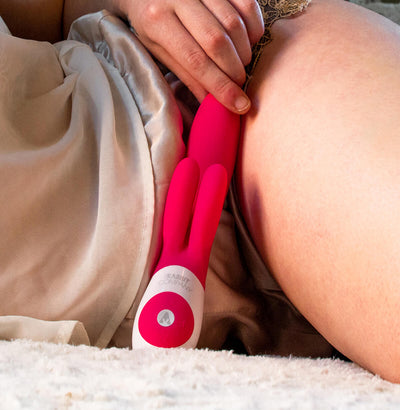
If you’re exploring with The Rabbit Company, each body safe silicone vibe is designed for dual stimulation (G-spot + clitoris). The Full Silicone Rabbit, Flicking Rabbit, or The Thrusting, Rotating Warming Rabbit provide extreme internal (G-Spot) and external (clitoris) stimulation at the same time. Perfect for your squirting journey.
Step 5: The bare down method
This is a big one. Right before squirting, many people report a strong urge to pee. If you’ve already emptied your bladder and you feel safe, try leaning into the sensation rather than clenching against it. Push into the orgasm!
A common pattern is: more arousal → more pressure → urge to pee → letting go → release.
Bottom line
If squirting happens, great. If it doesn’t, also great. The win here is learning what your body likes and creating a pleasure practice that feels safe, curious, and pressure-free. Remember this is a pleasure journey…and The Rabbit Company has all the tools you need.
Putting pressure on yourself (or your partner) is one of the most reliable ways to make squirting not happen. Aim for connection and sensation first, and let your body do whatever it does.